Minecraft: The Best Example of Games As Art
The episode doesn’t stop there, because once you’ve returned from either of those two paths, you head off as a group with whichever other character you picked up in the first episode (Lukas for me) to find the last member of the Order of the Stone, Soren the Architect. This path also follows a relatively fast-paced action sequence, but falls a little short with its sub-par cliffhanger. It’s only episode two, but the weird events surrounding the Order of the Stone and exactly what they’re going to do to stop this crazy Wither Storm seems as though it will never be resolved.
Let me begin by saying that this episode is particularly short, like a little over an hour short. I guess that’s what happens when the first two episodes are only separated by a few weeks, but the fact that to get the entire experience you have to play through it twice sort of pans out well because it then makes the episode about two hours long. Still, a much longer playthrough for the sequel was expected considering the complication of the events taking place. That being said, the episode covers the areas following either Elligaard or Magnus and each path allows you to follow and understand more of the world of Minecraft. There are a few inconsistencies that don’t make sense and some new events that don’t necessarily pertain to Jessie or his/her friends, but that doesn’t label the episode as terrible. By inconsistencies, I mean there were points in the game where I thought, “why can’t they just do this/that in order to progress?” One moment that comes to mind is when a character falls into a hole and can’t seem to get out when they could have built their way out as they were able to in the first episode. The rest of the episode is littered with little things like that that make you scratch your head and ask those questions.
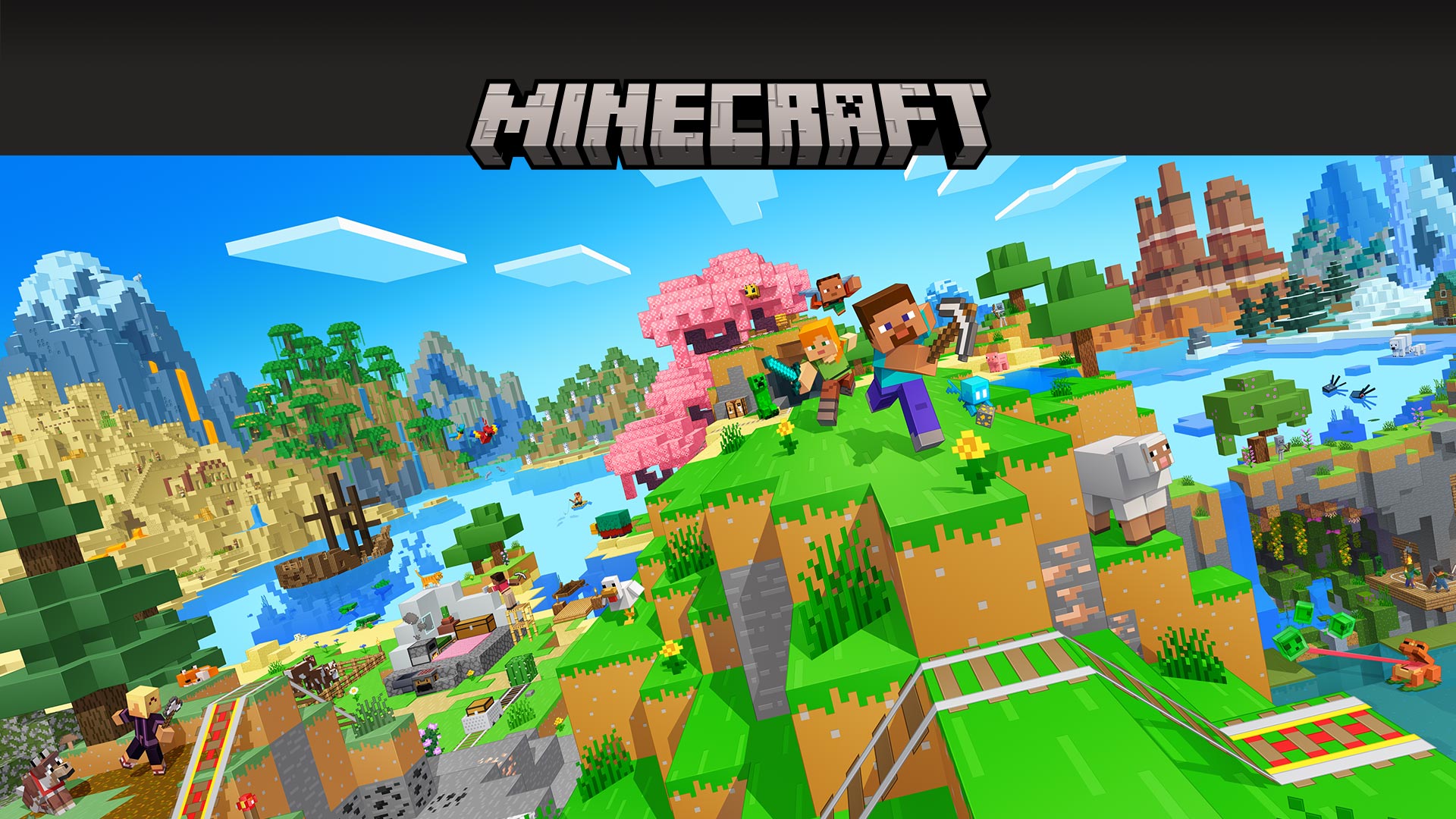 The expansive nature of Minecraft ’s world is also what contributes to this fully realized sandbox vision. The worlds are virtually infinite (on PC) and provide ample opportunity to adapt and explore multiple biomes and topography. There’s no real reason to go to one area over the other, but players are frequently compelled to do so. It’s an embrace of wanderlust, one that has influenced many other games like the upcoming No Man’s Sky . You have no objective beyond the horizon and there might be seriously dangerous monsters out there. You might not be well-equipped or even supposed to go there at the current equipped state. But you keep going, just to see. Just to explore.
While it’s not quite Minecraft in space as some might have gathered, this delightful indie brings a celestial twist to some of that game’s fundamentals. Astroneer features space-themed exploration, item crafting, assembly, and loads of survival gameplay to b
Now Minecraft has no overarching objective, so it instantly challenges McGonigal’s claim that a goal is required in a game. But actually, Minecraft ’s main goal is composed of multiple smaller goals. It doesn’t have a “grand” objective, but it has smaller objectives, little bite-size incentives that replace each other over time and take the role of a larger objective. First you collect resources, then you build a house, Stardew Valley mods then you survive the night, then you wake up and continue, but each with steadier and steadier increases in scope and scale. Even better, there’s no one direction to go. Being able to explore in multiple regions and build whatever you feel is satisfactory is open-ended. You are given tools and no direction, yet you are still creating. You’re making the direction. This is a massive undertaking, one that changes everything that anyone knew about videogames before, and it’s a bigger embodiment of the “sandbox” mentality than Grand Theft Auto has even been.
The real issue with Nintendo that the lack of a Wii U version of Minecraft best summarizes, though, is their general stubbornness and seeming inability to provide the most obvious things that their fans want. Minecraft has sold over 30 million units to date. Most recently it sold over one million units on the PS3, despite the fact it can be run by most new millennium computers, and has been available for the 360 for some time. It’s a game that reaches across generations, and has become a bestseller on every platform its touches.
Another issue that impacted the episode as a whole were the amount of times that the members of the Order backtracked into flashbacks that told of the argument that disbanded them. While I understand that it’s crucial to the story, it took away completely from the decision making and the story that revolves around Jessie and the Wither Storm. The characters, minus a scene with Petra, receive almost no depth and leave it to the environments and the little bit of dialogue to develop them. With the environments being the main reason to play the episode, the lack of exploration doesn’t help its case. For a game that is meant to develop according to character choices, there didn’t seem to be a whole lot of decision-making going to develop the story further. Hopefully, the cliffhanger ending will pose as an entryway to further Jessie and his friend’s role in all of this instead of being focused on the Order.